James P. Stanton
The Brass VerdictJames P. Stanton is the judge presiding over California v. Elliot, the murder trial of Walter Elliot. He sets ground rules for the proceedings, cautions against media influence, and responds to a letter reporting juror misconduct. His role places him at the point where the trial’s carefully controlled procedures meet outside pressures and an emerging threat to the jury’s integrity.
Role and Courtroom Setting
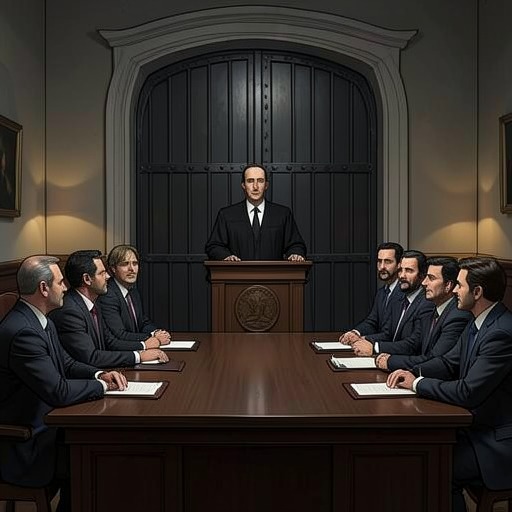
Jury selection begins in Stanton’s courtroom at the Criminal Courts Building, with eighty prospective jurors drawn from the fifth-floor jury pool and a crowded gallery of media, courthouse professionals, supporters, and onlookers. Stanton’s management of the case includes setting ground rules before the trial gets underway. Once the anonymous jurors are seated, he reminds them not to read or watch reports about the case and establishes a central distinction for their work: attorneys’ opening statements are not evidence, and jurors must decide at the end whether the evidence supports what each side has said.
The trial’s procedure is especially consequential because the defense and prosecution are competing to give the jury a coherent account of the case. Michael Haller presents the prosecution’s theory as a complicated account built on motive and opportunity, while arguing that the evidence itself is circumstantial. Stanton does not decide that contest in advance; his instruction defines the jury’s task as judging the statements against the evidence presented in court.
Media Pressure and Jury Protection
On the Monday the trial begins, proceedings start later than expected after Stanton meets with the lawyers and Elliot in chambers for nearly forty minutes. He expresses displeasure about a front-page Los Angeles Times story that portrays Haller as a sympathetic underdog and worries that jurors may have seen it, despite his earlier direction that they avoid coverage. Haller explains that he gave the interview expecting the story to appear before trial and notes that the prosecution had been asked for comment but declined. Stanton appears to accept that explanation, though grumpily, and cautions the lawyers about speaking to the media.
The warning changes Haller’s plans: he cancels an agreement to provide Court TV commentary after each day’s proceedings because he does not want to risk further conflict with Stanton. Stanton’s concern also reinforces the unusual conditions of the trial. Haller has advised Elliot against filling the gallery with prominent supporters or corporate lawyers, believing that the anonymous jury’s perception matters more than a public show of support. Stanton’s reminders seek to keep the jurors’ decisions within the courtroom, where they can be based on admitted evidence rather than news coverage or spectacle.
Handling the Trial’s Evidence
Stanton presides as the parties present sharply different explanations of the case. During the defense’s expert testimony about gunshot residue, Dr. Shamiram Arslanian explains that residue could have transferred to Elliot when he was handcuffed and placed in the four-alpha patrol car. She further describes a second transfer from Elliot’s hands and arms to the front of his jacket during ordinary movement. The testimony gives the jury a specific alternative explanation for residue readings that might otherwise support the prosecution’s account. Stanton’s importance in these moments lies in his position over a process in which technical evidence is presented for the jury to evaluate, rather than in any stated endorsement of either side’s interpretation.
Juror Misconduct and the Unfolding Threat
The trial’s safeguards face a more direct test when Stanton informs Haller and prosecutor Jeffrey Golantz of an unusual, developing situation involving juror misconduct. He explains that his office received a letter addressed personally to him on Thursday, but that he did not open it until after court on Friday. He presents the letter to the attorneys, says he has already handled it, and instructs them not to touch it. The information does not, in itself, resolve what has happened; Stanton describes the situation as still developing. His disclosure brings a possible breach of the jury process into the open while preserving the careful control over how the matter is handled.
Stanton is defined in the available events less by a personal history than by the responsibilities his office places on him: maintaining the jury’s separation from publicity, clarifying the distinction between argument and evidence, and responding to a warning that the trial may have been compromised. The repeated attention to what jurors have seen and how they will judge the evidence makes courtroom procedure an active part of the trial’s stakes.